Find the Method Beneath the Dessert Hype
Viral social media cooking videos are engineered to maximize audio-visual sensory cues: the loud snap of a sugar crust against teeth, the gooey stretch of toasted nut paste, or the glossy shear of a dark chocolate bar. However, the 30-second clips consistently edit out the technical hurdles that determine success or failure in the home kitchen.
When you strip away the background music and aesthetic lighting, every trending dessert is governed by classical confectionery laws. Understanding these fundamentals transforms unpredictable viral experiments into reproducible techniques.
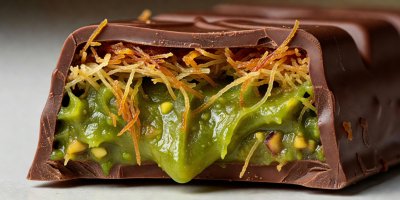
Case Study 1: The Dubai Pistachio Kadaif Bar
Originating from Fix Dessert Chocolatier in the United Arab Emirates, this chocolate bar pairs shredded phyllo pastry dough (kadaif) toasted in butter with sweet pistachio cream and a hint of sesame tahini, enveloped in a molded chocolate shell.
Where home attempts fail: if you toast the kadaif dough in regular unclarified butter, the 18% water naturally present in dairy butter softens the fine wheat strands, leaving you with soggy strings instead of crackling crunch. To preserve absolute crispness, you must use 100% clarified butter (ghee), sautéing until deep chestnut brown, and completely cool the noodles before folding them into your pistachio paste.
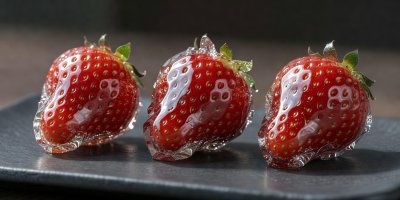
Case Study 2: Glass-Crack Sugar Shells (Tanghulu)
Northern Chinese tanghulu utilizes hawthorn fruit encased in boiled sucrose. When replicated with strawberries or grapes at home, recipes often yield a sticky, tooth-wrecking sludge that turns into runny syrup within minutes.
The chemical reason is syrup temperature and moisture transfer. Sugar boils through distinct thermal stages: soft ball, hard ball, soft crack, and hard crack. At precisely 149°C to 154°C (300°F–310°F), sucrose loses almost all moisture (remaining water < 1%). If you pull your pot at 140°C, the syrup retains sufficient hydration to stay pliable and sticky forever. A candy thermometer is mandatory.
Surface Fruit Moisture Destroys Sugar Shells
Never glaze wet fruit. Fruit skin carries an invisible layer of water. When hot 150°C sugar strikes liquid water, steam forms beneath the coat, triggering rapid sucrose recrystallization that clouds the glass shell and leaks juice. Pat berries dry with lint-free towels and dry under a fan for 20 minutes before dipping.
Step-by-Step Technical Instructions for Viral Success
Engineered Pistachio Kadaif Bar
Method: Finely chop 120g frozen kadaif pastry. Fry in 35g ghee over medium heat until fragrant and dark gold. Cool to room temperature. Fold into 160g smooth pistachio paste and 15g toasted tahini. Temper 250g dark chocolate, line a polycarbonate bar mold, pipe cooled filling, and cap with tempered chocolate. Chill 20 minutes.
Clean-Snap Strawberry Tanghulu
Method: Thread 3 dried strawberries onto bamboo skewers. In heavy saucepan, combine 200g white granulated sugar and 100ml water without stirring once. Boil on medium-high until candy thermometer reads exactly 150°C. Dip fruit in a single 2-second rotation. Immediately plunge into an ice-water bath for 2 seconds to freeze the glass.
High-Char Basque Mini Custard
Method: Beat 250g room-temperature cream cheese with 80g sugar until smooth. Whisk in 2 whole eggs, 120ml heavy cream, 8g flour, and 1g sea salt. Pour into parchment-lined 6-inch cake ring. Bake at 230°C (450°F) for 22 minutes until top burns dark mahogany while the interior wobbles like warm gelatin.
Cause: You stirred the syrup while boiling, or sugar crystals on pan walls seeded crystallization. Do not stir sugar syrup after it starts boiling; wash down sides with a wet pastry brush.
Cause: Chocolate was not tempered properly or was chilled in a humid freezer. Keep molding temperatures between 18°C and 20°C in a dry environment.